Monday, December 12, 2011

Extreme/Mainstream Views

The mainstream and extreme views may like opposites but they are much more complimentary as opposed to polar opposites. Mainstream can be loosely defined as society's or a group's prevalent ideas, attitudes, morals, practices, etc. Mainstream ideas as a whole, are generally more safe ideas, to appeal to that group or society's main population. Extreme views can offer a little more excitement. Their ideas usually differ so much from the general consensus, it draws in the mainstream.

I think back to class when we were reading about the Tea Party. The Tea Party stemmed from the more mainstream right wing views that the Republican Party stands for. The mainstream media focuses on this party due to their extreme views and their overtly racist protests of Obama. The acknowledgment and time spent talking about this party has given the party steam. Constant exposure can bring an extreme group to be a mainstream one.
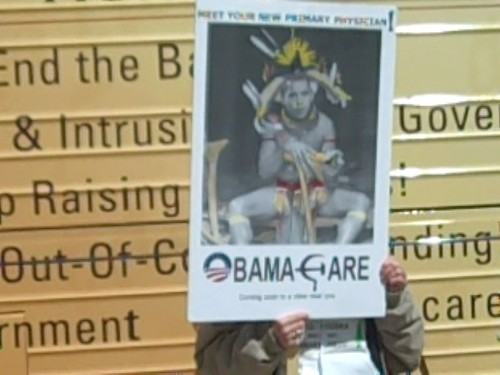
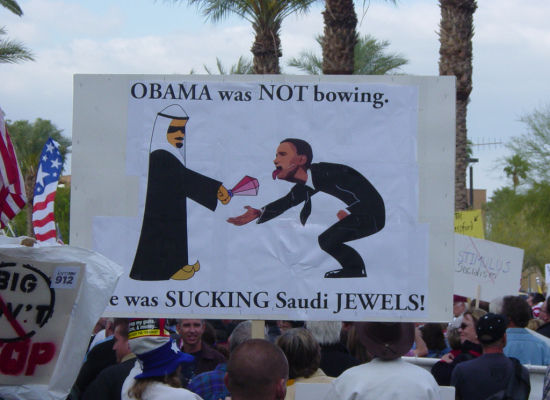


offensive Tea Party signs


When it comes to movies and music, the mainstream always seems to be "dissed" on. People love movies or bands when the general public hasn't adopted them into the mainstream. Liking and discovering music and movies that aren't played on the radio or recognized by peers always seem to give an individual a certain satisfaction. Uniqueness is something that many strive for almost making that mainstream. It's a strange circle.

What I find interesting is that music groups and movies embrace being extreme or different from the mainstream, like their fans, but when the mainstream receives their message, and society embraces them or their work (and see cash), it's easy to go from independent to mainstream.

Looking at something such as white nationalism, it's hard not to notice what's going on with the Tea Party. I know that not every person in the party have the same extreme views about Obama, but they are the ones that carry the most attention. Though the group gets represented in a negative light by some media outlets, their existence and influence is still recognized by the mainstream media.

I've hit this note a couple of times already, but white nationalists feel that the Jewish run media portray white nationalists in a negative light purposely in order to discredit and set aside their views.

Movies like Higher Learning and American History X, aren't highly thought upon in white nationalist circles because they are said to be Jewish propaganda. Though they claim these movies to be based on extreme stereotypes, making the trouble white youth a neo-Nazi and a black athlete as a victim, I found a couple comments interesting in the Stormfront forums. One person said this about Higher Learning,

Seeing this movie so long ago made me do research into race relations, the result was one of the many parts that led to my racial awakening. So I think that movie has done a lot to turn Whites into WN's. Maybe more movies like that should be made. Thank you John Singleton!

though Higher Learning doesn't portray WNs in positive light, their message, no matter how extremely its portrayed, can still cause racial awakening in some.


Though they feel that movies misrepresent them, it could be doing them favors by having these stereotypes wake up the "sleepers." If this person, hadn't seen this movie, would his/her views still be the same today? When extreme views make their way into the mainstream, a group can be upset that their message can be skewed to make them look like the bad person, but isn't their message reaching a mainstream audience a win for themselves as well?

Saturday, December 10, 2011

Frank Meeink in American History X


I feel like I am beating a horse to death by constantly bringing up American History X, but how can you deny the parallels between Derek in American History X and Frank Meeink? Actually after doing research, some of American History X's scenes are loosely based off of Frank Meeink.


The parallels between Frank and Derek are staggering. Both were confused kids and easy targets for recruitment. In Derek's case, his ability to hate was always there, instilled by his father. When, his father is killed at the hands of blacks Derek's whole attitude is changed. After a meltdown on a local news interview, Derek is recruited by Cam to become part of the movement. Frank's troubled path to the movement, was due to different things. Rejection by family and constantly being beat up by local gangs , had Frank looking for another calling.

http://www.youtube.com/watch?v=fs0ZvwIai7w&feature=related

Like Derek, Frank became a leader for the Neo-Nazi's at a young age. I googled more about Frank and found from various sites that he indeed became a Skinhead leader. I was interested to see how Frank was perceived in the Stormfront community. Many discredit him and said he was never fully embraced by the movement and was nothing.

Derek and Frank both go through transformations in jail, befriending the enemy. The perspective of others dramatically shifts because of exposure to the other culture. Hollywood and Meeink's personal story brings ideas of change being possible if one is isolated from others in the movement and learn about and get to know other races that they had spent their lives hating.

In Derek's case, he kills three Crip members. This scene is the favorites of many white nationalists members. The violence in the way he murders the black gang members are applauded by many white nationalists. That part, along with Derek's ideas at the dinner table that meet no comebacks are the reasons why many white nationalists watch that movie and even own it.

Frank mentions that, "The whole skinhead movement revolves around violence, and I was so tired of that." That line is interesting because it strikes many white nationalists the wrong way. Many white nationalists feel that their movement doesn't revolve around violence; however, everyone's favorite scene in American History X is the violent way Derek murders the gang members.

It's that double standard that comes up again. The victim card is busted out. No one is for violence, but they all love it. Also, Frank is a beloved member while in the community and a traitor and a non-credible source after he leaves it.

What's interesting is why are Derek's and Frank's stories so touching. The fact is they were both violent, hateful people who served jail time. Their redemption, comes when they realize they are wrong. These stories are highlighted because it restores faith that people do change. It was interesting in class, when David brought up the idea, why these stories are accepted and advertised as redemption stories. Would the affect be the same if a Black Pather who murdered a white person was seeking redemption? Even when there is a good message, it still has a weird under tone.

Paranoia Hinders

Researching websites and blogs advocating white nationalists ideas I couldn't come up with a solid actor, director, and writer that were consensus favorites in the white nationalist community. There were certain genres and eras that many were fans to. D. W. Griffith is a key person to the movement after his 1915 film, "The Birth of a Nation," but realistically it's not very current to the ideas of today. It did wonders as far as getting the KKK back into the spotlight, but almost being a century old, it is simply outdated.

John Wayne and westerns also were a common theme along with older horror movies. Stanley Kubrick and Hitchcock are generally respected in the forums. The pattern I did seem to catch was that a lot of these favorites were older, nothing really in current mainstream filmmaking really resonates with white nationalists today.

As I searched for answers, I found that in the eyes of many white nationalists, today's media focuses on the idea that media, cinema, and the government is run by Jews. The idea that Jewish people have their hands in everything is a representation of the paranoia that current white nationalists feel today. In their minds, something such as cinema, portrays certain messages that mold the ideas of today's youth.

I found this interesting article that portrays common stereotypes used in movies or TV shows from natvan.com:

For example, a racially mixed couple will be respected, liked, and socially sought after by other characters, as will a "take charge" Black scholar or businessman, or a sensitive and talented homosexual, or a poor but honest and hardworking illegal alien from Mexico. On the other hand, a White racist—that is, any racially conscious White person who looks askance at miscegenation or at the rapidly darkening racial situation in America—is portrayed, at best, as a despicable bigot who is reviled by the other characters, or, at worst, as a dangerous psychopath who is fascinated by firearms and is a menace to all law-abiding citizens. The White racist "gun nut," in fact, has become a familiar stereotype on TV shows.

White nationalists have portrayed themselves as the victims, feel being misrepresented in movies. However, movies such as American History X, are hated by followers because of the "Jewish ending and ideas." The fact that a person portrayed as a white supremacist can be "rehabilitated" by a black person. However, they love the rest of the movie as far as showing Derek's past.

Paranoia is the key reason that white nationalists think that everything is run by Jewish influence. The victim card can only be played so far. From the same article they say,

Once we have absorbed and understood the fact of Jewish media control, it is our inescapable responsibility to do whatever is necessary to break that control. We must shrink from nothing in combating this evil power that has fastened its deadly grip on our people and is injecting its lethal poison into our people's minds and souls. If our race fails to destroy it, it certainly will destroy our race.

I personally don't understand the angles white nationalists are taking. They claim to be the targets of reverse racism in movies, when they get exploited by a minority or someone who opposes their cause, such as in Inglorious Bastards. However, a movie that has a white person being racist and disliked by an audience was created by the Jewish run Hollywood to make him unlikable and to keep the white man oppressed by today's society? They have it both ways, and they play the blame game no matter what. Movies change with the times, you simply cannot get away with the same things in the 1940s in present day. There are many factors to that, such as harsher guidelines by the MPAA, political correctness, and relevancy to today's "mixed" society.

The portrayal of white nationalists or even whites in general in cinema, won't ever be held to the standard that white nationalist groups want. They want to play the victim and receive national sympathy, but they hate being stereotyped in the movies. However, if they are given a "more accurate" portrayal, they seem to be the bad guys and receive national backlash. Either way, the agenda of the Jewish media will always try to keep them down.

Pocahontas and Racial Purity

Racial purity is a topic that has been alive in America since the first ancestors settled. The idea that white represented a notion of civilization and a "rightness," while blacks and other races are primitive in comparison. Miscegenation has always been an issue for whites. The idea of tainting the goodness that is "whiteness" seems unfathomable. You can look back to the first settlers of America, despite being invaders, felt that they had brought civilization to the long time native people of the land. Though their ways differed from that of European whites, it still proved to be a sufficient way of living for them. However, the more civilized whites pinned the natives as savages and pushed them further and further from their lands to gain what was unrightfully theirs. The idea that their whiteness takes precedent over others.

Take a movie like Pocahontas, it deals with idea of miscegenation and racial purity. John Smith is a settler in the New World and falls in love with Pocahontas, the daughter of the chief. However, Smith and his men are there to push out Pocahontas' tribe to get its gold. This movie idea is very popular and was even rehashed in the movie Avatar. The time period may have changed, but the story remains the same. The Englishmen in Pocahontas do not have any interests in befriending the tribe, but look to gain the gold that was believed to be under the tribe, at any costs necessary. That attitude is the similar thinking of many of the early settlers and that their whiteness gave them privilege because their purity and civilized ways.

John Smith acts as a different agent. He represents the idea of accepting others and takes in the new group. Race mixing has always been a sort of taboo, but John Smith breaks those barriers by pursuing a relationship with Pocahontas. What I find interesting is that how Disney portrays the idea of race mixing being opposed on both sides. It seems that both the Native Americans and the Englishmen were against the relationship of John Smith and Pocahontas because these two worlds weren't thought to be able to mix. Were the natives against mixing with whites in fear of something new or because they though their race was superior to the whites?

Either way you see in an innocent Disney movie, that the theme of racial purity is strong. Conversely, the idea of John Smith being the good guy absorbs the native people into the culture and is willing to "mix" with someone like Pocahontas points to the fact that not every white person believes that racial mixing is wrong.

For a story that was supposed to take place in the 1600s, not much changed when the Constitution was drafted in the 1780s. The 3/5 compromise was enacted that allowed for other non whites to be counted as 3/5 of a person. That notion of equality between whites and other races still hasn't reached that ideal point and maybe never will. But a big step was during the Civil Rights Movement, when places no longer were segregated. Mixed schools, restaurants, etc. came to light.

The movie Missippi Burning, captures the ideology of a small southern town when dealing with the desegregation that came to light. in the film, civil rights workers are murdered and two FBI agents are sent to go investigate. The community proclaims itself as an Anglo-Saxon democracy, and has avoided integration, along with having total non-acceptance of other races. The KKK members of the town are aided by the police, in targeting African Americans, brutally torturing them and setting houses on fire. The two agents work to find different ways to investigate the murders because they receive no information from people in the town (black or white). Whites didn't come forward with information because they were against what the civil rights workers stood for and favored a place that separated the whites from the other mongrels. And the blacks didn't come forward in fear of what the KKK would do.

The KKK are represented as having full authority to terrorize. The town sought to keep racial purity and not allow for mixing and backed the methods the KKK used to terrorize the African American community.

Racial purity will always be a sensitive issue. In cinema, its portrayal is similar to real life. Some people are okay with it, while others will go to extremes to protect it. Race mixing of course is more common today than it was in 1960 or the 1600s; however, the taboo of race mixing is still alive and strong. However, what people who believe in whiteness as being right fail to realize is the fact that without the absorption of other cultures and ideas, we wouldn't be where we are today. Whether they admit it or not, their lives have all been affected by "mixing."

Monday, December 5, 2011

Paul Mooney is the Man

More blogs in the works, but thought I'd share this article from comedian Paul Mooney, a comedian I have loved ever since I first saw the "Ask A Black Dude" segment on Chappelle Show in 7th grade.


Lit Review

I stumbled upon a journal entry in the Journal of American Studies from the Cambridge University Press. The author, Tom Rice, explores the revival of the Ku Klux Klan through the avenue of cinema. Birth of a Nation opened the flood gates for the KKK to become more main stream. Shortly, after the release of the movie, various movies produced by the KKK were shot, distributed, and shown to the masses. Many of the films did it its best to "counteract the poisonous propaganda circulated by alien enemies who have declared their determination to wipe out the Klan." The 1920's were a huge time for the Klan because the movies reached new audiences and could engage widespread interest to the cause. Knowing what was on the line, movies were made to legitimize their movement.

In the movie The Face at Your Window (1920), the Klan identified themselves as true patriots. That movie alone served as a catalyst for growth. To further increase their numbers, members of Klan vowed to show pro-Klan movies to at least one other man to have their message widespread.

Movies such as The Toll of Justice and The Traitor Within sought to redefine the clan by confronting misrepresentations of the group. For example in The Toll of Justice, the common conception that the Klan are real life villains are challenged. The movie's villain uses the Klan as the scapegoat for murder. The Klan tries to come across as the victims of misrepresentations or stereotypes. Believe it or not these films helped people question their stance on the Klan, and recruitment numbers went up.

People with secret ties to the Klan, when questioned about films and their message, denied any sort of connection to the Klan and downplayed the fill to be on Americanism and not to be mistaken with the Ku Klux Klan. Subliminal themes along with the determination to change their image from being violent racists to "true Americans" really did wonders for Klan's numbers.

The article only touches on movies from 1915-1930s. I find it interesting that the Klan has always found themselves feeling like the victim for misrepresentation, even back when society was more tolerant of those feelings (pre-Civil Rights movement). The Klan has always felt that they have not received a fair shake. I know the Klan doesn't represent every white nationalist, but there is more history with the Klan being depicted in cinema.

In the book Racism and anti-racism in American popular culture, author Catherine Silk talks of a shift from films showing blacks favorably. After World War II, films depicted blacks in a positive light and slowly moved away from the days of controversial, racist depictions of blacks (such as black face). Of course films today can depict some stereotypes, but no way is it as volatile and excessive as it has been in the past.


This shift has left white nationalists hating today's cinema. Just looking at top 10 lists of white nationalists, no recent movies really hit home for them. They feel that they are being censored by the Jewish-run media, again making them misunderstood, making them the victim. No matter the era, the message always seems to be misunderstood, the only difference is that today, it would be difficult to use cinema as a way to win back some support. Movies that are pro-white nationalism can not be mainstream. Cinema is no longer an outlet to rehabilitate image or recruit, but there are plenty of more avenues of doing so then there was in the 1920s.

Tuesday, October 25, 2011

Storm Front

Movies often offer an escape for people, but a lot of current movies just remind White Nationalists of the hold that the Jews have on pop culture. Looking through Strom Front, there are many threads analyzing many of the current movie releases and discussions about whether the movie is proper for White Nationalists to enjoy or if it is just "anti-White propaganda" that the Jews are shoving down society's throat. Often in the threads, you can find movies that White Nationalists will boycott. A pretty recent example was the movie "Thor." There was a huge outcry because Idris Elbra, a black actor, was casted to portray Heimdall, Sentry of Asgard, who many believed was white. A black god outraged so many White Nationalists, many members on Storm Front decided to boycott this movie.


Movies that portray White Nationalists are even more heavily scrutinized. I found through the forums there are many movies that portray White Nationalists, but few are deemed acceptable by them. The most popular movie portraying White Nationalists is "American History X." It was discussed in class, that White Nationalists actually loved a lot of the parts in this movie. The brutal violence towards blacks were cheered upon in the forums. In their eyes the movie takes a turn for the worst when the characters are made to realize that hate is wrong and decide to leave the movement. As described on Storm Front, a lot of these movies have some "agenda" by them. Like World War II movies do with Nazis, movies about White Nationalists depicts them as the villains, or has a story where someone on the villain side takes a turn for good.

Many people in the forums point out the scarcity of good movies about White Nationalists. Many of the current movies out, are either cheesy and depicts White Nationalists as the villains, or are just terrible films in general. However, a movie I kept seeing be brought up repeatedly was "Romper Stomper." This movie seems to be the golden standard of movies dealing with White Nationalists. No surprise that this movie was released in Australia. Usually, foreign movies are better received by White Nationalists because they are free of Jewish influence (in their minds).

Here is an interesting post by SSleinpnir in the forums of Storm Front regarding "Romper Stomper:"

It has much more of an impact on the viewer because of it's extreme realism. American History X takes some of most brutal scenes of all time and just makes them look like silly lifetime specials by slowing it all down and making everything melodramatic.

Romper Stomper does the opposite, it films everything as it happens, making it one of the most disturbingly realistic works I've ever seen. Also, unlike other films about skinheads, Romper Stomper takes a completely unbiased look at their culture. Instead of showing everyone has rude, inconsiderate miscreants and then centering the film on the one person who is above at all, this film displays their culture for what it really is.

A realistic look at the skinheads, instead of an over-dramatic look at the struggle one person makes to get out. Russell Crowe is disturbingly natural, fully absorbed and overwhelmingly commanding in his greatest performance of all time.


"Romper Stomper" seems to be a favorite because it depicts White Nationalists in an unbiased manner, many believe that movies made in America in present day cannot be unbiased because many directors are afraid to "step on the toes of the Jewish power behind their industry."

After reading many reviews about "Romper Stomper," I found that it is very similar to " A Clockwork Orange." It is of no surprise that White Nationalists would respond to a movie that pays homage to Stanley Kubrick's classic. Many White Nationalists have Stanley Kubrick's movies in their top 10. The classics are more acceptable movies because it was prior to all the "influence" of Hollywood today. If you look at their favorite movies, they usually don’t date sooner than the 80s. The older movies still portray whites as the hero, something that they believe Hollywood won't do today.